THE JUICE BAR ERA
Juice Bars were one of the places that played an important role in the development of street culture in New York in the early 1970s.
DJs, dancers, and the people who gathered there shared music, danced, and interacted with one another, helping to develop a unique street culture.
Juice Bars are also an essential cultural background for understanding not only Rock Dance, but also the street cultures that followed, such as Disco, HIPHOP, and HOUSE.
Here is the story of the Juice Bar era as told by Papo, who experienced those times firsthand.
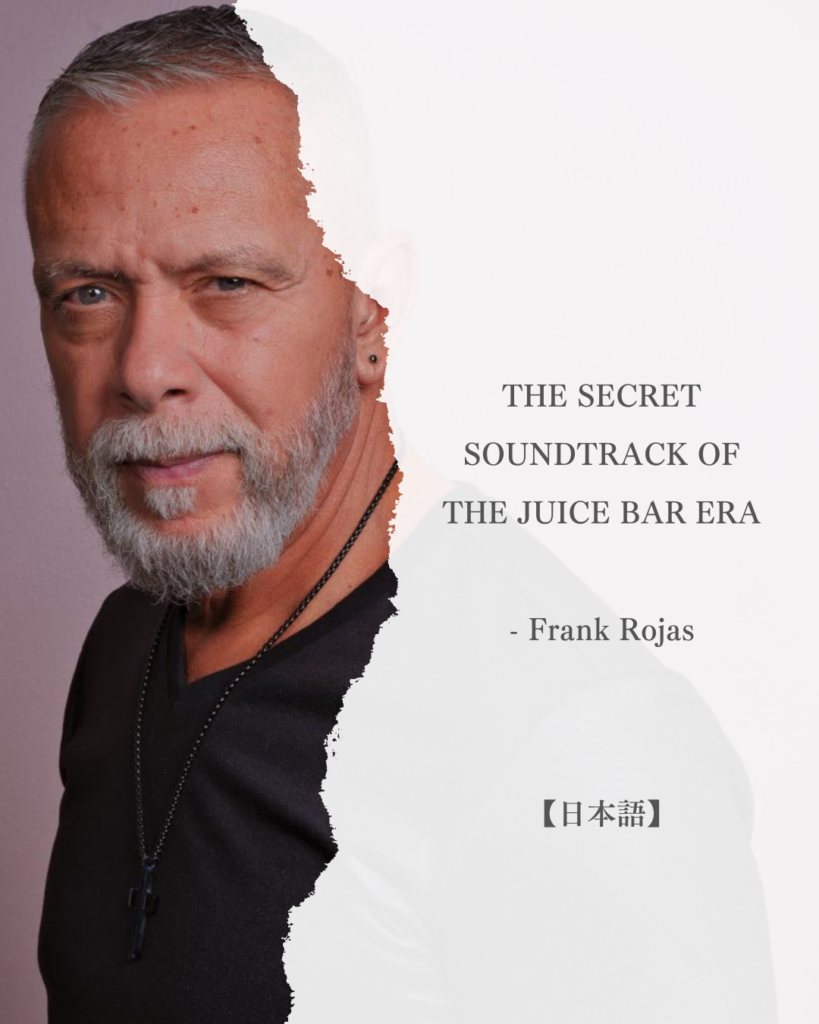
THE SECRET SOUNDTRACK OF THE JUICE BAR ERA – Frank Rojas aka Papo
One of the greatest misconceptions in urban music history is the belief that Disco, Hip Hop, and House simply appeared.
They didn't.
Before any of them became movements, there was something else.
An underground musical phenomenon that lived almost entirely inside New York City's Juice Bars.
Most people never heard these records.
They weren't being played on commercial radio. They weren't topping charts. They weren't being marketed to the masses.
They belonged to a secret world. A world controlled by the first generation of great DJs who pioneered a completely new way of playing music.
These DJs weren't simply selecting records. They were curating experiences.
Building energy. Controlling emotion. Creating dance floors that felt more like spiritual gatherings than parties.
The records they played came primarily from Black musicians, singers, producers, arrangers, and bands who were creating some of the most innovative music of the era.
Soul. Funk. Jazz. Afro-Latin rhythm. Deep percussion. Experimental grooves. Music that spoke directly to the body.
The Juice Bar DJs had access to songs that most people would never hear unless they were part of the movement.
And somehow the music traveled. Through cousins. Friends. Neighbors. Dancers. A friend of a friend of a friend.
If you were connected to the culture, you knew.
You knew where the party was. You knew which DJ was playing.
And most importantly...You knew the songs.
Not because they were famous.But because they moved people.
These were the records that had the Juice Bars lit. The records that fueled the dance floor. The records that helped create Rock Dance.
The records that would later influence Disco, Hip Hop, House Music, and virtually every form of urban dance culture that followed.
Songs like:
James Brown’s
“It’s A New Day”
Bobby Byrd’s
“Hot Pants I’m Coming”
Baby Huey’s
“Listen To Me”
Jimmy Castor Bunch’s
“Potential”
Manu Dibango’s
“Soul Makossa”
Osibisa’s
“Music For Gong Gong”
Donald Byrd’s
“Lansana’s Priestess”
Lonnie Liston Smith’s
“Expansion”
Earth, Wind & Fire’s
“Power”
Isaac Hayes’
“Theme From The Men”
And dozens more. This was the competitive Rock soundtrack.
The music that pushed dancers to challenge one another. To innovate. To create style. To create identity.
To create reputation.
Then there was another side of the culture.
The mingling records.
The groove records. The records that allowed the room to breathe.
Marvin Gaye.
The Chi-Lites.
Gil Scott-Heron.
The Spinners.
The Temptations.
Ramsey Lewis.
The Four Tops.
The music that brought people together between the battles and the displays of style.
And finally...The slow songs.
The forgotten chapter. Because the Juice Bar movement wasn't only about competition.
It was also about connection.
As the night wound down, the energy shifted. The lights softened.
The dancers became couples. The floor belonged to the slow dance.
And for many, these moments became as important as anything that happened during the peak of the night.
The Delfonics.
The Moments.
Soul Generation.
The Fuzz.
The Originals.
The Dells.
Billy Stewart.
These songs closed the evening.
Not with noise. But with intimacy. The slow dance was not an afterthought.
It was an essential part of the culture.
An intricate piece of the Juice Bar experience. A ritual. A release.
A way of ending the night together.
There are hundreds more records. Hundreds more stories. Hundreds more memories.
But understanding these songs is understanding the foundation.
Because
before Disco became mainstream... Before Hip Hop became global... Before House Music emerged from Chicago...
There was the Juice Bar sound.
And those who lived it know exactly what that means.